

FAUCI SUMMONED
The question is whether America’s most powerful health official used one evidentiary standard for claims that protected his institution—and another for claims that threatened it.

James Lyons-Weiler, PhD
July 29 is Anthony Fauci’s Day is Fauci’s Day of Reckoning. Fauci is returning to Congress under subpoena. The central question is no longer whether every dissenting COVID hypothesis was correct. It is whether the country’s most powerful health official used one evidentiary standard for claims that protected his institution—and another for claims that threatened it. We should start a pool on how many times Fauci will “fail to recall”.
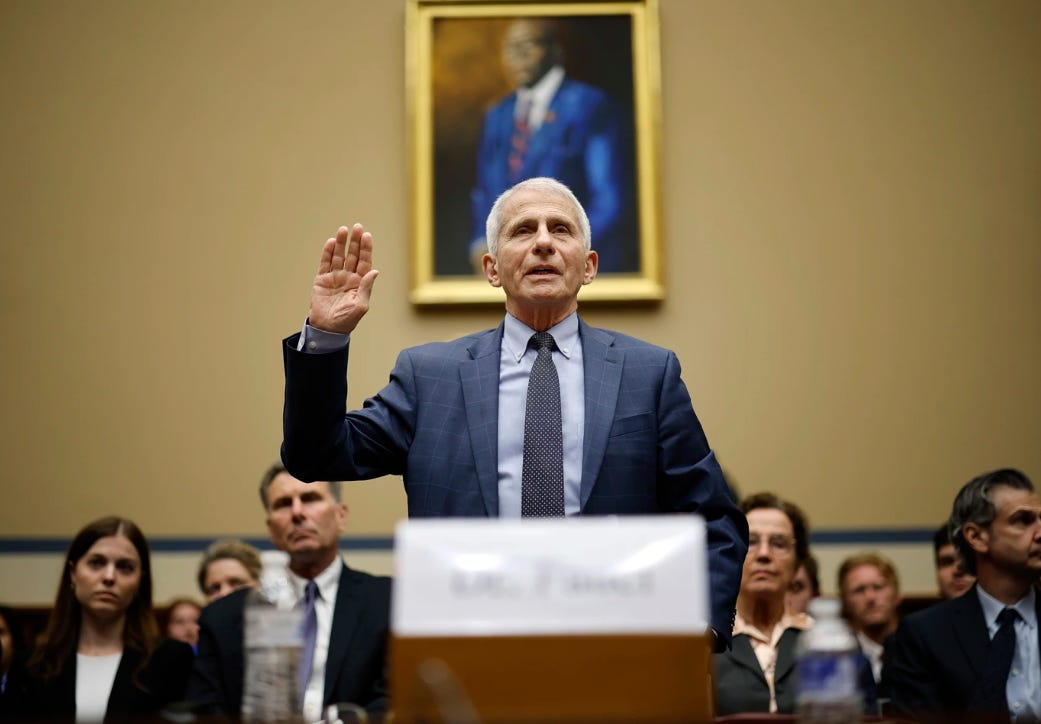
On June 29, Senator Rand Paul made an announcement that would have been almost unthinkable at the height of Anthony Fauci’s power. “Dr. Fauci backed out of voluntary testimony, so I issued a subpoena,” Paul wrote. “He will testify on July 29. Accountability is coming.” On July 13, Paul supplied the hour: 10:00 a.m., in public, before the Senate Homeland Security and Governmental Affairs Committee.
As of this writing, the committee’s hearing page has not yet posted a formal notice for July 29. The committee chairman has publicly announced the date, time, witness, subpoena, and subject. Fauci has been summoned.
This will be described as a fight about the “lab leak.” That description is too small. SARS-CoV-2 may have entered humans through a research-related accident, or through a natural spillover that has still not been demonstrated by an intermediate host. The precise origin remains unresolved. The evidentiary case against Fauci does not require pretending otherwise.
The case is about a pattern: categorical denials where disclosure was warranted; retreat into administrative definitions when ordinary language became dangerous; the conversion of uncertain science into compulsory messaging; the public demolition of disfavored evidence by standards not imposed on favored evidence; and records whose proposed deletion, disappearance, or migration to private channels is consistent with evasion of oversight. Some elements of that pattern are established in documents. Some are reasonable inferences. Some remain allegations. July 29 matters because those categories can finally be separated under oath.
One Sentence He Cannot Sustain
On May 11, 2021, Fauci told Senator Paul: “The NIH has not ever and does not now fund gain-of-function research in the Wuhan Institute of Virology.” On July 20, after Paul cited experiments in which altered bat coronaviruses acquired enhanced properties, Fauci refused to retract the claim. “If anybody is lying here, Senator,” he said, “it is you.”
The theatrical indignation concealed a definitional substitution.
The National Institute of Allergy and Infectious Diseases, which Fauci led, funded EcoHealth Alliance. EcoHealth sent a portion of that money to the Wuhan Institute of Virology for bat-coronavirus research. The HHS Office of Inspector General later audited NIH awards totaling approximately $8 million, including about $1.8 million in subawards to eight recipients, WIV among them. The OIG found failures by both NIH and EcoHealth, including a progress report submitted nearly two years late and an experiment that NIH concluded had crossed a specified viral-growth benchmark and should have been reported immediately.
These are not opinions about the pandemic’s origin. They are facts about the grant chain and its oversight.
Fauci’s defense, made explicit in his January 2024 transcribed interview, was that he had been using the government’s operative regulatory definition—the narrow category governed by the P3CO and enhanced-potential-pandemic-pathogen framework. Under that administrative test, he maintained, the funded work was not “gain of function.” In ordinary experimental English, however, a virus that gains replicative capacity, host range, transmissibility, or pathogenic properties has undergone a gain of function. “Was the experiment described by the words?” and “Did NIH classify the experiment into the regulated ePPP bucket?” are different questions.
Fauci answered the first as though Paul had asked the second, without announcing the substitution. That is not scientific clarification. It is type replacement: take a broad factual question, silently narrow it to an administrative category, then issue a categorical denial that sounds broad to everyone listening.
NIH’s former acting director, Lawrence Tabak, later acknowledged the distinction in congressional testimony: the work could be described as gain-of-function research in the generic sense while not meeting the government’s narrower regulatory definition. That is the distinction Fauci could have supplied in May 2021. He did not. Instead, he declared the proposition false and accused his questioner of lying.
But did he cover his track sufficiently? Is there evidence he knew and considered there was no difference? And is modifying a virus under one named activity different from modifying the virus the same way with the same effects based on what we call the activity?
Semantics won’t save Fauci.
Which definition did Fauci believe ordinary viewers understood? Why did he not disclose that NIAID money passed through EcoHealth to WIV? Why did he answer a plain-language question with an undisclosed regulatory term of art? And why, after NIH concluded that an experimental-growth benchmark had been exceeded, did his denial remain categorical?
July 29 should begin there.
Origin Narrative Management
On January 31, 2020, evolutionary biologist Kristian Andersen wrote to Fauci that features of the new virus “(potentially) look engineered” and that its genome seemed “inconsistent with expectations from evolutionary theory.” Andersen did not say that engineering had been proved. He did exactly what a scientist should do: he identified an anomaly and reported his uncertainty.
The next day, Fauci participated in a private teleconference with Andersen, Jeremy Farrar, Francis Collins, and other scientists. The surviving emails and later congressional record show that several participants regarded a laboratory-associated scenario as plausible enough to require urgent discussion. Within days, the trajectory of the public argument changed. On March 17, Andersen and colleagues published The proximal origin of SARS-CoV-2 in Nature Medicine, declaring that their analyses “clearly show” the virus was not a laboratory construct or purposefully manipulated.
That sentence ruled out less than the public was led to believe. A virus need not be a purpose-built construct to be involved in a laboratory accident. A naturally collected virus can be passaged, adapted, recombined, cultured, or simply mishandled. “Not demonstrably engineered” does not entail “not research-associated.” Yet the paper became a public-relations solvent for the whole laboratory-origin category.
On April 17, Fauci cited the paper from the White House podium as though it were independent external validation. He did not tell the public that he had been involved at the beginning of the authors’ urgent deliberations. His defense is that he did not dictate the paper’s conclusion and that the authors came to their view on the evidence. That may be true. It does not answer the disclosure problem. A government official who helps convene a private scientific process and then publicly invokes its product as independent authority owes the audience that provenance.
The House Select Subcommittee’s final report reconstructed this chronology and argued that Proximal Origin was used to suppress the lab-origin hypothesis. Fauci disputes that characterization. He testified in 2024 that a lab leak is not inherently a conspiracy theory and remains possible. That concession is welcome. It arrived after dissenters had been described for years as purveyors of misinformation for making the same distinction.
The newest allegations make the chronology more serious. In June 2026, the outgoing Director of National Intelligence released documents reportedly showing that Fauci briefed CIA personnel on origins in 2021, offered investigative direction, emphasized WIV pangolin work, and recommended experts aligned with natural origin. Senator Paul now alleges that Fauci helped shape what the intelligence community told the public while failing to foreground NIAID’s institutional interest in the WIV funding chain. Those released materials must be authenticated, contextualized, and tested. They do not by themselves prove that Fauci manipulated an intelligence assessment. They do establish questions that cannot be answered by another recital of “I don’t recall.”
Who invited Fauci into the intelligence process? What conflicts were disclosed? Which analysts received his suggestions? What did he say about EcoHealth’s experiments, the missing WIV databases, and the anomalous early outbreak geography? Did he advocate a hypothesis, or merely describe possibilities? Most importantly: did the intelligence community know that the official briefing it was receiving came from the head of the institute whose grant portfolio was under scrutiny?
The Record is Not Fauci’s Friend
Cover-up is a conclusion about intent. “Consistent with cover-up” is a description of behavior. The record now contains behavior that demands the latter description.
In September 2025, the Senate committee published two Fauci messages. In a February 2, 2020 email to Francis Collins, sent while the origin discussions were accelerating, Fauci wrote: “Please delete this e-mail after you read it.” In a July 20, 2020 message to his chief of staff, he again wrote: “please delete this e-mail after you read it.” The committee release alleges that these requests were part of a larger failure to preserve federal records.
There may be benign contexts for a deletion request: duplication, sensitive personal material, or information retained elsewhere in an official system. Fauci should be permitted to identify one. But a federal official at the center of a historic emergency does not get to treat preservation as optional, particularly while discussing the emergency’s possible origin. The public need not prove why a record was targeted before asking why it was targeted.
JOIN US AT IPAKEDU.ONLINE

Then there is David Morens, Fauci’s former senior adviser. In emails obtained by Congress, Morens discussed using a private account, wrote that he would delete material he did not want “FOIA’d,” and suggested he had learned methods for making emails disappear. In April 2026, federal prosecutors indicted Morens on charges including conspiracy and destruction or concealment of records. An indictment is an allegation, not a conviction; Morens has pleaded not guilty. Fauci was not charged in that case.
The distinction protects accuracy, but it does not erase institutional context. The senior adviser’s alleged record-evasion practices, Fauci’s own deletion requests, EcoHealth’s late and incomplete reporting, WIV’s refusal to provide underlying records, and repeated memory failures in congressional interviews form a pattern of opacity around the same institutional risk. No single item proves a coordinated cover-up. Together, they make “nothing to see here” an untenable position.
At his 2024 interview, Fauci distanced himself from Morens’s conduct and denied using private email to evade FOIA. That denial should be tested against complete account inventories, device records, backup systems, and contemporaneous correspondence—not accepted or rejected on partisan instinct. July 29 should be an evidence hearing, not another contest of facial expressions.
Henry Ford Study
Fauci’s influence extended beyond origins. It shaped which treatment signals were treated as actionable, which were treated as embarrassing, and which questions scientists were socially permitted to ask.
In July 2020, physicians from Henry Ford Health published an observational study of 2,541 hospitalized COVID-19 patients. In their cohort, treatment with hydroxychloroquine was associated with substantially lower in-hospital mortality after adjustment. The paper—Arshad et al., International Journal of Infectious Diseases, PMID 32623082—described a system-wide protocol, cardiac monitoring, and multivariable analysis.
The study did not prove that hydroxychloroquine caused the mortality difference. It was not randomized. Treatment allocation could have been confounded by disease stage, clinical judgment, steroid use, calendar time, selection, or other measured and unmeasured differences. Henry Ford’s result was a signal requiring replication, not a license for certainty.
Fauci’s public response was to call the evidence “flawed” and emphasize that it was not a randomized, placebo-controlled trial. Worse, he claimed that the four-fold reduction in mortality - MORTALITY - was not important because, in his words, “We don’t know if was due to the corticosteroids or the hydroxychloroquine”. No calls for further studies. Kill the study. He did.
Institutionally, the asymmetry was obvious.
When remdesivir produced a favorable interim result in the NIAID-sponsored ACTT trial, Fauci announced a “clear-cut, significant, positive effect” from the Oval Office before the full paper and supporting data were available. The principal benefit was a shorter median time to recovery; the interim mortality comparison was not statistically significant. When masks were needed as policy, mechanistic plausibility, observational evidence, and precaution were enough. When six feet of distancing was institutionalized, Fauci later conceded in his 2024 transcript that the rule “sort of just appeared” and that he did not recall studies establishing six feet rather than another distance. But when a cheap, off-patent drug produced a large adjusted association in a hospital system, only the randomized trial could speak.
One may reasonably conclude, after reviewing later randomized trials, that hydroxychloroquine did not reduce mortality in hospitalized patients. The RECOVERY and SOLIDARITY results weigh heavily against that use. That conclusion still does not vindicate the way the question was handled. A late-hospitalization mortality trial does not answer every early-treatment, dosing, combination, prophylaxis, or stage-specific hypothesis. Nor does a null result retroactively justify treating physicians who proposed controlled testing as disinformation agents.
The scandal is not that Fauci failed to endorse hydroxychloroquine. The scandal is that public-health authority helped turn an empirical question into a loyalty test. Henry Ford’s observational design was invoked to disqualify its signal, while weak evidence supporting favored nonpharmaceutical interventions was amplified as sufficient for nationwide behavior control. The standard moved with the policy preference.
That climate damaged more than one drug. Repurposed-treatment research became trapped between political promotion on one side and bureaucratic reputational defense on the other. Hydroxychloroquine, ivermectin, multidrug outpatient protocols, timing hypotheses, and physician experience were often bundled together and rejected as a cultural identity. Some of those claims were poor; some trials were negative; some signals failed. The correct response was discriminating experimental design. The actual response too often was foreclosure.
Fauci should be asked what high-quality early-treatment platform NIAID built in the first months of 2020; how agents were prioritized; why stage-specific hypotheses were repeatedly answered with evidence from different disease stages; and whether the government’s public rhetoric made recruitment into the very trials it demanded more difficult.
Mask Flip Flops
On March 8, 2020, Fauci told 60 Minutes that “there’s no reason to be walking around with a mask.” He said a mask might block a droplet, but did not provide the protection people imagined, and could lead wearers to touch their faces. Months later, universal masking became a civic duty, and Fauci sometimes wore two masks.
Conditions did change. Evidence of transmission by people without symptoms became stronger. Supply constraints eased. It would be foolish to demand that advice never change during a new epidemic.
But Fauci later acknowledged another reason for the original advice: officials feared that public demand would worsen shortages for healthcare workers. That was a resource-allocation judgment. It was not evidence that masks lacked source-control value. Instead of telling the public the full truth—“masks may help, but clinicians need the scarce supply first”—officials issued an efficacy-sounding dismissal. They used a claim about science to obtain a behavioral result.
That choice had a long half-life. When the recommendation reversed, many Americans correctly perceived that the original explanation had not been candid. Officials responded by insisting that “the science changed,” a phrase that covered both genuine scientific updating and the undisclosed supply-management rationale. Trust did not fail because citizens were too primitive to understand uncertainty. Trust failed because authorities treated candor as an obstacle to compliance.
The later evidence never supported the moral absolutism that followed. Mask effects vary by material, fit, filtration, setting, duration, ventilation, adherence, outcome definition, and background prevalence. A fitted respirator in a high-risk clinical environment is not equivalent to a loose cloth covering on a child in a classroom. “Masks work” compressed all of those variables into a slogan. “Masks do not work” commits the same error in reverse.
Fauci’s obligation was to preserve those distinctions. Instead, he became the face of a communication regime in which nuance was treated as sabotage and visible compliance as evidence of virtue. July 29 should examine who decided to withhold the supply rationale in early 2020, what evidence supported subsequent mandates in specific settings, and why officials continued to speak in universal terms after the heterogeneity of effects was obvious.
Forty cycles and the binary fiction
The most technically consequential communication failure may be the least understood.
The CDC’s original diagnostic panel was a real-time reverse-transcription PCR assay. It generated cycle-threshold values, but the agency authorized it as a qualitative test: positive or negative. Under the assay instructions, both viral targets could be called positive when their amplification curves crossed before 40 cycles. The same FDA-hosted instructions warned that detection of viral RNA might not indicate the presence of infectious virus or establish that the virus was causing the patient’s symptoms. They also warned that the chance that a positive result would be false rises as prevalence falls.
This requires one distinction that public reporting almost never made. An analytical false positive means the target was not truly present—perhaps because of contamination, nonspecific signal, or laboratory error. A clinically misleading positive can be analytically correct: a few RNA fragments are present, but there is no viable virus, active disease, or meaningful transmission risk. A binary case counter treated both problems as though they were identical to a newly infectious person.
By mid-2020, culture studies had made the threshold problem impossible to ignore. Bullard et al. found no viral growth in their sample set above a cycle threshold of 24 or more than eight days after symptom onset (DOI 10.1093/cid/ciaa638; PMID 32442256). Singanayagam et al. found that the probability of recovering infectious virus fell as Ct rose and with time after symptoms, while still identifying occasional culture-positive samples at higher values (DOI 10.2807/1560-7917.ES.2020.25.32.2001483; PMID 32794447). Ct values are assay-dependent and cannot be converted into a universal infectiousness cutoff. But that variability strengthens the argument for context; it does not justify erasing the measurement.
Fauci understood the issue. In the July 17, 2020 episode of This Week in Virology, he explained that at cycle thresholds around 35 or higher, attempts to culture replication-competent virus were almost always unsuccessful and the result could represent “dead nucleotides.” Yet he did not use his national platform to demand that case reporting distinguish low-Ct acute infections from high-Ct residual detections; that laboratories report assay and threshold context; that low-prevalence screening positives receive appropriate confirmation; or that hospitalization and death counts distinguish admission with a remote RNA signal from illness caused by active COVID-19.
The failure was not that the PCR assay was “fake.” PCR is a powerful analytical method. The failure was converting a conditional molecular signal into an unconditional social fact. A qualitative authorization discarded quantitative context that the instrument had measured. Case counts built on that binary were then used to close schools, trigger isolation, measure waves, and adjudicate policy success.
No single Ct threshold separates infectious from noninfectious people. Specimen quality, platform, target, collection timing, immune status, and clinical presentation matter. That is precisely why the public needed a measurement framework rather than a red light. Fauci’s silence on this point—despite his own stated knowledge—was not a minor omission. It protected the simplicity of the dashboard at the expense of the validity of the inference.
July 29 should ask when Fauci first understood the culture-versus-Ct literature; what he advised the CDC, FDA, and White House; whether he objected to treating all qualitative positives as equivalent cases; and why the public heard “case” with none of the conditional structure that a competent virologist knew the word concealed.
What July 29 must establish
The hearing will fail if it becomes a montage of old television clips punctuated by partisan speeches. Fauci is practiced at answering the emotionally charged version of a question while evading its measurable core. The committee should therefore ask short questions tied to documents and require definitions before conclusions.
For origins, the committee should establish the complete grant chain, the experiments performed, the reporting thresholds, the dates NIH learned that a threshold had been crossed, and every definition Fauci used when testifying. It should identify who initiated the February 2020 calls, what Fauci received from the Proximal Origin authors, what he supplied, and what he disclosed when citing their paper publicly.
For intelligence, it should establish every briefing, participant, document, recommendation, and conflict disclosure. The new 2026 allegations should not be read into the record as verdicts; they should be converted into falsifiable questions.
For records, the committee should display the complete email threads containing “please delete,” identify retention obligations, determine whether deletion occurred, and trace official business across every account and device. Morens’s alleged conduct should be handled with the care owed a pending criminal case, but the administrative controls around him are fair territory.
For treatment and mitigation, the committee should require Fauci to state the evidentiary threshold he applied to each intervention at the time—not the standard reconstructed after the fact. Henry Ford, remdesivir, masks, distancing, early-treatment platforms, and qualitative PCR should be placed on one methodological ledger. If standards differed, Fauci should explain why.
And the committee should not permit “science evolves” to function as a universal solvent. Science does evolve. That does not explain undisclosed rationing messages, silent definitional substitutions, erased measurement context, or requests to delete records. Updating a belief is science. Concealing why one said something else is governance.
Reckoning
Anthony Fauci became more than an adviser during the pandemic. He became an epistemic authority: the official who told the country not merely what government recommended, but what “the science” permitted a reasonable person to believe. That concentration of scientific, administrative, media, and moral authority was itself a systems failure.
The point of July 29 should not be vengeance. It should not be an attempt to prove, in one afternoon, that every dissenter was right or that every intervention was useless. It should be the recovery of distinctions that power erased: research funding versus origin proof; generic gain of function versus the ePPP regulatory category; RNA detection versus infectious virus; observational signal versus causal estimate; scientific update versus strategic messaging; missing records versus demonstrated criminal intent.
Those distinctions do not weaken the indictment of Fauci’s public conduct. They make it stronger. A serious case does not need to exaggerate.
The documented record already shows that NIAID money reached WIV through EcoHealth; that NIH and EcoHealth failed at critical oversight tasks; that a viral-growth reporting benchmark was exceeded; that Fauci issued a categorical funding denial by relying on a narrow definition he did not disclose; that he participated in early private origin discussions and later cited their published product without explaining his role; that he asked colleagues to delete emails; that his office became associated with an alleged culture of FOIA evasion; that he used shifting standards of evidence for treatments and mandates; and that he knew PCR threshold context mattered while the national dashboard flattened it into a binary.
What remains unresolved is intent, coordination, and the full extent of the record. Those are not small residual questions. They are the reason subpoenas exist.
On July 29, Fauci will again have the opportunity to say that his critics misunderstood him. This time, the committee should place the definitions, grants, emails, transcripts, assay instructions, and timelines on the table first. Then it should let him explain.
For five years, the public was told to trust the science. The minimum reciprocal demand is that the scientist answer for the record.
Principal documents and studies
• Rand Paul, X announcement, June 29, 2026:
• Rand Paul, X hearing time and subject, July 13, 2026:
• Senate Homeland Security and Governmental Affairs Committee, hearing calendar: https://www.hsgac.senate.gov/hearings/
• HSGAC, Fauci deletion-email release, September 12, 2025: https://www.hsgac.senate.gov/media/reps/chairman-rand-paul-uncovers-new-evidence-of-fauci-deleting-official-records-calls-him-to-testify-before-hsgac/
• HHS OIG, The National Institutes of Health and EcoHealth Alliance Did Not Effectively Monitor Awards and Subawards, A-05-21-00025, January 25, 2023: https://oig.hhs.gov/reports/all/2023/the-national-institutes-of-health-and-ecohealth-alliance-did-not-effectively-monitor-awards-and-subawards-resulting-in-missed-opportunities-to-oversee-research-and-other-deficiencies/
• House Select Subcommittee on the Coronavirus Pandemic, Final Report, December 2024: https://oversight.house.gov/wp-content/uploads/2024/12/2024.12.04-SSCP-FINAL-REPORT-ANS.pdf
• Anthony Fauci transcribed interview, Part 1, January 8, 2024: https://oversight.house.gov/wp-content/uploads/2024/05/Fauci-Part-1-Transcript.pdf
• Anthony Fauci transcribed interview, Part 2, January 9, 2024: https://oversight.house.gov/wp-content/uploads/2024/05/Fauci-Part-2-Transcript.pdf
• Andersen KG et al. “The proximal origin of SARS-CoV-2.” Nature Medicine. 2020;26:450–452. DOI: https://doi.org/10.1038/s41591-020-0820-9. PMID: https://pubmed.ncbi.nlm.nih.gov/32284615/
• Arshad S et al. “Treatment with hydroxychloroquine, azithromycin, and combination in patients hospitalized with COVID-19.” International Journal of Infectious Diseases. 2020;97:396–403. DOI: https://doi.org/10.1016/j.ijid.2020.06.099. PMID: https://pubmed.ncbi.nlm.nih.gov/32623082/
• CDC, 2019-nCoV Real-Time RT-PCR Diagnostic Panel: Instructions for Use: https://www.fda.gov/media/134922/download
• Bullard J et al. “Predicting infectious SARS-CoV-2 from diagnostic samples.” Clinical Infectious Diseases. 2020;71:2663–2666. DOI: https://doi.org/10.1093/cid/ciaa638. PMID: https://pubmed.ncbi.nlm.nih.gov/32442256/
• Singanayagam A et al. “Duration of infectiousness and correlation with RT-PCR cycle threshold values…” Eurosurveillance. 2020;25(32):2001483. DOI: https://doi.org/10.2807/1560-7917.ES.2020.25.32.2001483. PMID: https://pubmed.ncbi.nlm.nih.gov/32794447/
• CBS, “Preventing coronavirus: Do face masks work?” 60 Minutes, March 8, 2020: https://www.cbsnews.com/news/preventing-coronavirus-facemask-60-minutes-2020-03-08/
• This Week in Virology 641, “COVID-19 with Dr. Anthony Fauci,” July 17, 2020: https://www.microbe.tv/twiv/twiv-641/
• Reuters, “Fauci denies suppressing COVID lab leak theory before U.S. House panel,” June 3, 2024: https://www.reuters.com/world/us/fauci-denies-suppressing-covid-lab-leak-theory-before-us-house-panel-2024-06-03/
• Current reporting on June 2026 declassified intelligence documents: https://nypost.com/2026/06/19/us-news/anthony-fauci-gave-millions-in-taxpayer-dollars-to-fund-wuhan-lab-research-tulsi-gabbard/

Excellent breakdown on semantics Dr. James Lyons Weiler .
I listened to your latest interview with Dr. Gary Null weeks ago which was great ,but this article here is so much more iinformative. Excellent work again and I applaud you ,
I always enjoy everything that you post.
Fauci needs to be made accountable, and also to send a clear message to the rest of these predatory psychopaths.